How Rahul plans his ₹45K salary every month
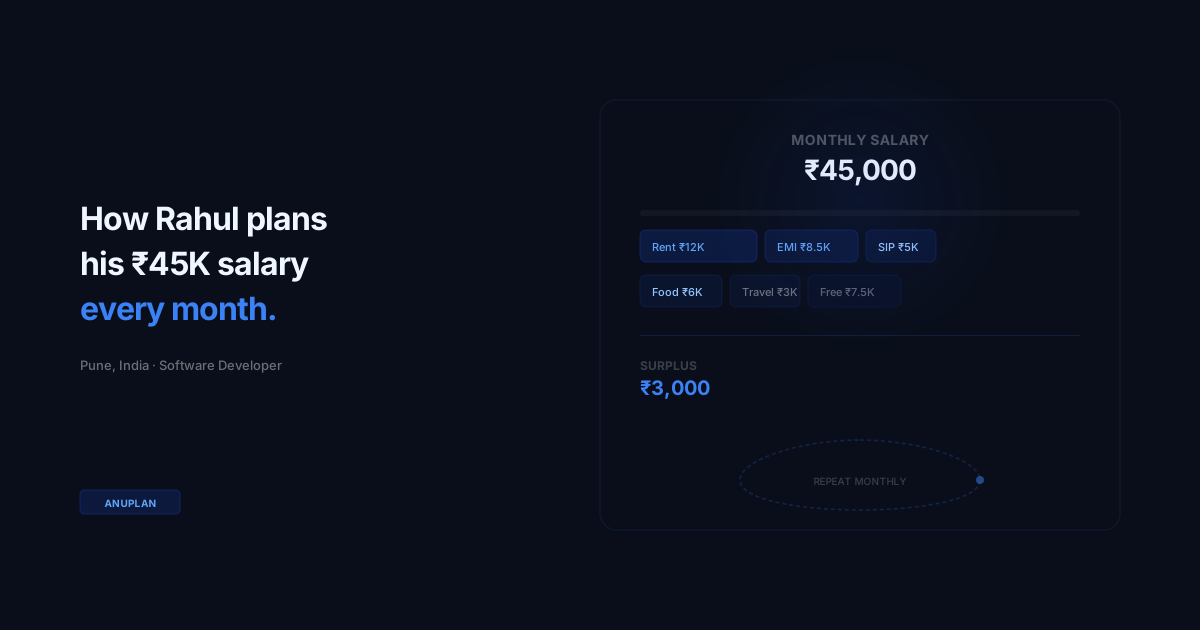
Rahul is 28, works as a software developer in Pune, and takes home ₹45,000 every month. He has a bike EMI, a SIP he started two years ago, and shared rent with a flatmate. His expenses aren't chaotic — but until three months ago, he had no system for deciding where his salary went before it started leaving.
Before AnuPlan
Rahul's month used to look like this: salary credits on the 1st. Rent transfers immediately. EMI auto-debits on the 5th. SIP goes on the 7th. After that — guesswork. Groceries, fuel, eating out, a new pair of shoes, splitting a dinner bill. By the 22nd, he'd check his balance and feel uneasy. Not broke, but unsure.
I wasn't overspending. I just never sat down and said: here's what I have left after my fixed stuff, and here's how I want to use it. He'd tried expense trackers before. They told him what he already knew — that restaurants and Swiggy were his biggest discretionary spends. But knowing where money went didn't help him decide where it should go next month.
The setup: 5 minutes on the 1st
Rahul's AnuPlan template looks like this:
Rahul's monthly allocation
He set this up once, saved it as a template, and now every month starts with a single tap. If something changes — a medical expense, a friend's wedding — he adjusts that one month's plan without touching the template.
Mid-month: logging actuals
Rahul doesn't log every transaction. He updates two or three categories roughly once a week — usually groceries and discretionary. It takes under a minute. The reminders nudge him if he forgets.
What matters isn't precision. It's awareness. When he sees "Discretionary: ₹4,200 of ₹7,500 used" on the 18th, he knows exactly how much freedom he has for the rest of the month. No mental math, no checking his bank app and subtracting guesses.
What changed after three months
Nothing dramatic. No "financial transformation." Just clarity:
- He increased his SIP from ₹5,000 to ₹7,000 after seeing a consistent surplus in months 2 and 3.
- He stopped feeling guilty about eating out — because he could see it was within his planned discretionary amount.
- The "day 22 anxiety" disappeared. He knows his position at any point in the month.
- Total time spent on planning: about 10 minutes per month.
10 min/month
Total time Rahul spends on salary planning
Why this works for him
AnuPlan doesn't connect to his bank. It doesn't categorize transactions automatically. It doesn't try to be clever. It gives him a place to make one decision — at the start of the month — and then see how reality compares to that decision.
For Rahul, that's enough. The tool matches the effort he's willing to put in (minimal) and gives him back something he didn't have before: a clear picture of where he stands, every day of the month, without ever opening a spreadsheet.
About AnuPlan
A salary planner for Android. Not an expense tracker.
₹299 / $4.99 · One-time · No account · Works 100% offline

More to read
MONTH — Assembly Instructions
Your month arrives as a flat-pack kit with nine parts and one step missing. A manual for the step nobody does — written by someone who skipped it for nine years.
AnuPlanI funded every goal in July — and still ran ₹1 lakh short
I set one line to ₹1 every month — a promise that nothing would leak. In July it quietly became ₹1,08,190, and every goal still got funded. Here's how AnuAI showed me the real picture.