Why AnuPlan isn't a budget tracker (and why that matters)
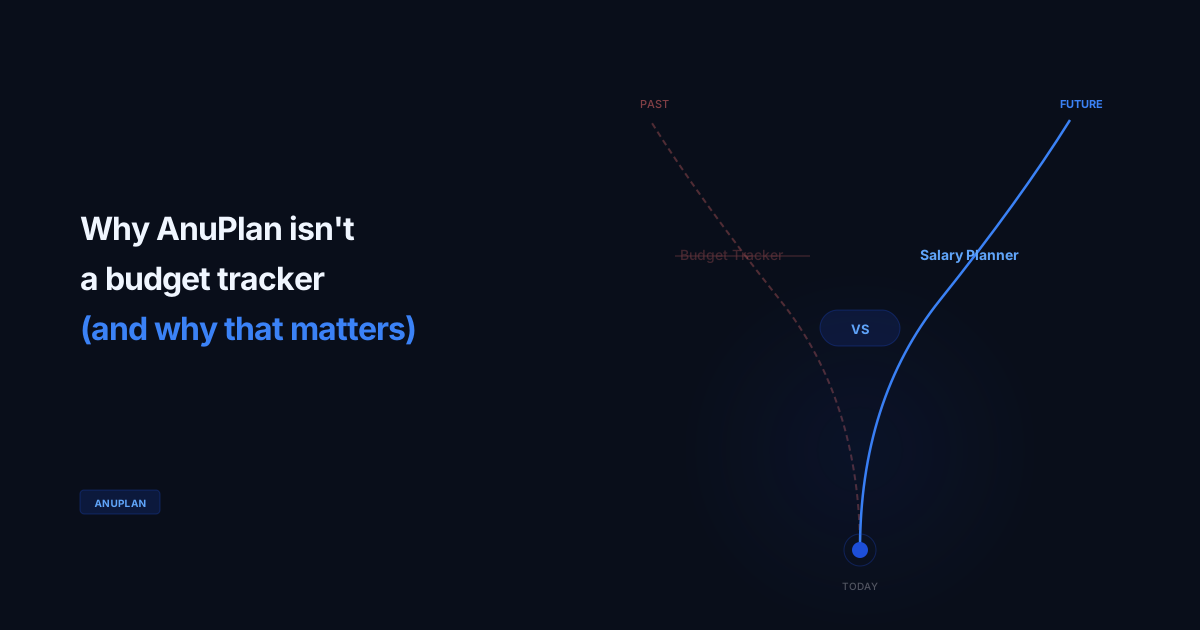
Budget trackers and expense loggers have one job: record what you spent. They do this well. Over time, they show you patterns. "You spent ₹8,000 on dining in March." Useful information. But it arrives too late to change March.
Budget trackers tell you what happened. AnuPlan helps you decide what will happen. AnuPlan works differently. It operates before the month starts, not after. You open it on the 30th or 1st, look at your incoming salary, and allocate it: ₹15,000 to SIPs, ₹12,000 to rent, ₹8,000 to groceries, ₹5,000 discretionary. Now you know, before the month begins, exactly what each penny is supposed to do.
The core difference
- Expense tracker: Records where money went (past)
- Budget app: Divides money after it arrives (present)
- Salary planner: Decides where money goes before the month starts (future)
The distinction matters because the failure mode is different. Budget trackers help you understand the past. AnuPlan helps you shape the future — specifically, the next 30 days.
If you've tried budgeting apps and found them frustrating, this is often why: you were being asked to log spending that had already happened, against categories you set in the past, to generate reports about behaviour you couldn't change. It feels like homework with no grade.
1st
One decision. One day. That's all it takes to plan your month.
Salary planning removes that friction. One decision at the start of the month. Then you live by it. Actuals get logged, yes — but against a plan you made intentionally, not as a postmortem of decisions that slipped by.
AnuPlan is a salary planner. If you're looking for an expense tracker, there are good ones. If you want to decide where your money goes before it leaves, this is the tool.
About AnuPlan
A salary planner for Android. Not an expense tracker.
₹299 / $4.99 · One-time · No account · Works 100% offline

More to read
MONTH — Assembly Instructions
Your month arrives as a flat-pack kit with nine parts and one step missing. A manual for the step nobody does — written by someone who skipped it for nine years.
AnuPlanI funded every goal in July — and still ran ₹1 lakh short
I set one line to ₹1 every month — a promise that nothing would leak. In July it quietly became ₹1,08,190, and every goal still got funded. Here's how AnuAI showed me the real picture.