How Sarah plans her $3,200 salary every month
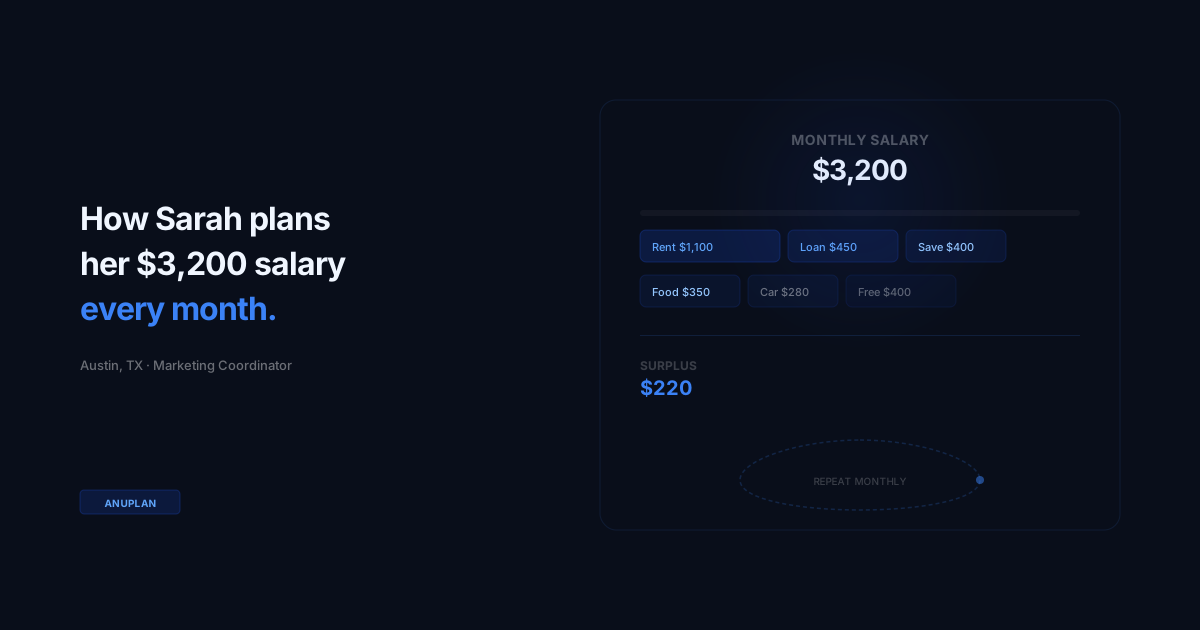
Sarah is 26, works as a marketing coordinator in Austin, Texas, and takes home $3,200 per month after taxes. She has student loan payments, a car note, and a goal to build an emergency fund. Her income is predictable — but until she found AnuPlan, her month-end balance never was.
Before AnuPlan
Sarah's relationship with money wasn't bad — it was vague. She paid her bills on time, never carried credit card debt, and put something into savings "when there was extra." But she could never answer the question: how much can I actually spend this week without dipping into next month's commitments?
I had a rough sense of my bills, but I never wrote down exactly where every dollar should go. I'd just hope it worked out — and it usually did, but sometimes it didn't. She'd tried Mint and YNAB. Mint overwhelmed her with categories and notifications about things she'd already spent. YNAB's envelope system felt like a second job. What she wanted was simpler: a way to look at her paycheck on the 1st and decide, in five minutes, where it all goes.
The setup: one evening, one template
Sarah's AnuPlan template:
Sarah's monthly allocation
She saved this as her template. Each month starts with a tap — load template, glance at it, adjust if anything's different (a birthday gift, a doctor's visit), and she's done.
The weekly check-in
Sarah updates actuals on Sunday mornings — groceries, discretionary, and gas. She checks her bank app for the numbers and logs them in AnuPlan. Takes about two minutes. The insight she cares most about: "Discretionary remaining."
That one number answers the question she used to agonize over: can I afford brunch this weekend, or should I cook? Not a guilt trip — just information. And because she planned the $400 intentionally, spending it doesn't feel wasteful.
Four months in: what's different
- Her emergency fund hit $1,600 — she'd never saved that consistently before.
- She reduced her discretionary allocation from $450 to $400 after month two, redirecting $50 to her loan. She wouldn't have noticed the room without seeing the surplus data.
- She stopped opening her banking app with anxiety. AnuPlan already tells her where she stands.
- The "I think I can afford this" feeling was replaced by "I know I have $180 left in discretionary."
$1,600
Emergency fund built in 4 months of consistent planning
Why this works for her
Sarah doesn't want to track every latte. She doesn't want AI telling her she overspent on dining. She wants a single moment of clarity at the start of each month — and then a way to check reality against that plan without effort.
AnuPlan doesn't sync with her bank. It doesn't send notifications about transactions. It doesn't gamify saving. It just holds her plan and shows her where she actually stands. For someone who wants to be intentional without making finance a hobby, that's the right tool.
About AnuPlan
A salary planner for Android. Not an expense tracker.
₹299 / $4.99 · One-time · No account · Works 100% offline

More to read
MONTH — Assembly Instructions
Your month arrives as a flat-pack kit with nine parts and one step missing. A manual for the step nobody does — written by someone who skipped it for nine years.
AnuPlanI funded every goal in July — and still ran ₹1 lakh short
I set one line to ₹1 every month — a promise that nothing would leak. In July it quietly became ₹1,08,190, and every goal still got funded. Here's how AnuAI showed me the real picture.